Natu Camara — artist
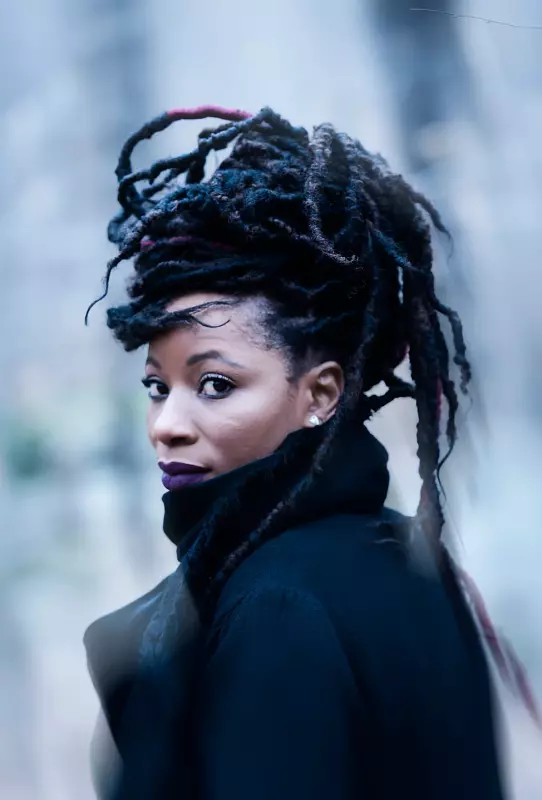
If you merged Miriam Makeba with Nina Simone, added a dose of Tracy Chapman and sprinkled on some Tina Turner, you might begin to explain Natu Camara. A vibrant singer and songwriter whose West African heritage, charged performance style and passion for social justice has made her a unique presence in World Music. Born in Ivory Coast and raised in Guinea, Natu’s devotion to music exploded in early success when she joined three friends to form West Africa’s first ever female R&B/hip-hop band, the Ideal Black Girls. Their first album, Guinea mou monèra (“It’s not a shame to be a woman”) went on to sell in the millions and was nominated for Best Album 2002 in Guinea. Encouraged by thousands of loyal fans thrilled by the music but even more inspired by its commitment to women’s power, the Ideal Black Girls toured throughout Africa while managing to finish college, an inspiration for an entire generation of girls. And their impact has been lasting. They organized Rhapsody, a revolutionary festival of live music and mentorship for females, and their song “Didi” continues to be played extensively, often as an expression of love at weddings. Their second album, recorded in Senegal, was also successful, but it marked a new phase to Natu’s career. Natu traveled to New York to spend time with her husband, only to endure a tragedy: not long after she arrived, he tragically passed away from cancer, leaving her suddenly alone at the beginning a long, dark period of mourning. For her fans she was silent, yet in the darkness, alone in a foreign country, with nothing but grief and a guitar her husband had bought for her as a wedding present, she quietly began playing and writing. When a peculiar bird came to her window uptown in 2013, she took it as sign that it was time to begin anew. She rapidly learned English, formed a band, and began to sing and write an entirely new form of music. Though she’d been playing hip hop music her entire young life, now she sang inspired by such stars as Ali Farka Toure, Mory Kanté, Fela Kuti, Baaba Maal and Nina Simone. An opportunity arose to record a couple of her songs in New York with Salif Keita's musicians. When Natu realized they could deliver the sound she was looking for, their offer to record in Mali was easy to accept. She packed her guitar and took an unforgettable journey into the heart of her new music. In Mali, master guitarist and producer Djessou Mory Kanté introduced her to the world-class musicians who would capture the heart and soul of the sound she longed to give the world. That album, Dimedi ("Child"), was received with acclaim in her home country, all those who knew her as a hip-hop performer being stunned by her metamorphosis. The Guinean child was celebrated on an hour panel discussion on national TV, where she performed three songs with just guitar and percussion. It was reported a nation was brought to tears when she performed Dimedi/"Child". Because of her commitment to helping her country and, in particular, young women in urgent need of mentors and strong female role models, Natu splits her time between Conakry, Guinea and New York. Whether it’s singing of forced child marriage and disunity in her own country or the loneliness and sadness she has witnessed in the developed world, Natu sings real stories about real issues in real people’s lives. “I sing about truth, love, peace, and the rights of women and children,” she says. “Meaning, my daily life is my inspiration.”